Best Grow Box for Beginners: What to Buy First and What to Skip

Best Grow Box for Beginners: What to Buy First and What to Skip

Table of Contents

If you are shopping for the best grow box for beginners, the right choice is usually a compact system with stable airflow, a decent LED grow light, solid odor control, and enough room to learn without constant troubleshooting. The catch is that a grow box is not always the smartest first buy. For some beginners, a small grow tent kit is cheaper, easier to upgrade, and more forgiving over time. That tradeoff matters, and most ranking articles barely touch it.

Indoor growers also need to think beyond marketing claims. Humidity control, airflow, energy use, and maintenance will shape your results far more than a flashy product page. EPA guidance says indoor humidity should stay below 60 percent, ideally between 30 and 50 percent, because moisture control is the key to mold control. That one detail alone explains why some beginner setups work well, and others become a headache fast.

Best grow box for beginners

The best grow box for beginners is not the one with the longest feature list. It is the one that keeps the environment steady without asking you to act like an HVAC technician on day one. In practice, that means a beginner-friendly grow box should have a modern LED grow light, basic odor control through a carbon filter, enough vertical and lateral growing space for your first cycle, and controls that are simple enough to check at a glance. 

Beginners usually do best when the setup is straightforward, while growers who want deep customization often lean toward a grow tent instead.

There is another wrinkle that matters in 2026. The best grow box for beginners is the one that helps you create the perfect environment with the fewest failure points, not the one with the loudest branding.

Beginner priorityWhat to look forWhy it matters
Easy first setupPre-configured ventilation, simple timer, clear controlsFewer setup mistakes early on
Stable climateReliable exhaust, passive or active intake, and humidity monitoringHelps control temperature and prevents mold risk
Sensible lighting systemFull-spectrum LED lights with manageable heatLower energy use and less heat stress than older HID systems
Odor controlCarbon filter or sealed exhaust pathHelps keep the smell from escaping
Room to learnEnough height and canopy space for a first cycleTight boxes become frustrating fast

The lighting point is not just sales talk. DOE material on horticultural lighting says indoor horticulture uses substantial energy, and that switching horticultural lighting to LED technology could save about one-third of total lighting energy use, equivalent to about $350 million in electricity cost savings across the segment. For a beginner, that does not just mean a lower bill. It usually means less heat to fight, which makes the whole setup easier to manage.

What a grow box really is, and who it suits?

A grow box is an enclosed indoor gardening system built to create a controlled environment around your plants. In simple terms, it combines a growing space, reflective interior, lighting system, airflow, and odor control in one compact shell. Some are closer to a grow cabinet. Others are sold as an automated grow box or a fully automated grow box with app control. 

Distinguish between small home-style units and commercial-grade modular systems, which is a useful distinction because the search term grow bocan mean very different things depending on the buyer.

This can help you frame the category more clearly. USDA’s National Agricultural Library defines hydroponics as growing plants in a water-based nutrient solution rather than soil, and notes that hydroponic production systems are used by hobbyists, small farmers, and commercial enterprises. 

USDA-backed controlled-environment agriculture research also describes indoor agriculture as a spectrum that runs from basic systems to fully insulated indoor operations using electric lighting. In other words, a beginner grow box sits at one end of a much bigger indoor agriculture continuum.

That matters because not every beginner needs the same tool. A renter in a tight apartment may prefer a compact enclosed box with better discretion and built-in odor control. A hobbyist who wants to experiment with a hydroponic garden may want more freedom to swap parts, pumps, or nutrients. Someone planning to scale later may outgrow a rigid cabinet quickly and end up wishing they had started with an indoor grow tent.

Grow box vs grow tent for first-time buyers

A grow box is easier to live with on day one. A grow tent is easier to adapt in month six. Grow box vs grow tent says a grow box tends to win on discretion, built-in odor control, and quick setup, while a grow tent usually wins on flexibility, scale, and long-term value. That lines up with what the broader SERP shows, too.

A grow tent is basically a reflective fabric enclosure that you customize with your own equipment. A grow box is more likely to arrive as a more integrated package. That difference affects everything: startup cost, airflow options, upgrade path, and how much troubleshooting you will do yourself. 

If you want a setup that works quickly and stays out of the way, a grow box usually feels easier. If you want full control over fan size, LED brand, carbon filter, or grow method, a grow tent kit often gives you more value.

FactorGrow boxGrow tent
Setup timeFaster, often under 30 minutes in integrated modelsUsually longer because you assemble parts
Upfront spendHigher all-in-one costLower entry cost, but accessories add up
Odor controlOften built inUsually, separate the carbon filter and ducting
CustomizationLimitedHigh
Space useBetter for tight corners and discretionBetter for larger plant counts and future upgrades
Beginner fitStrong for convenience-first buyersStrong for budget-first or experiment-first buyers

The features that matter most for beginners

A beginner does not need every smart feature under the sun. But a few core features do most of the heavy lifting.

Full-spectrum LED lights and manageable heat

The best beginner systems now lean on LED for a reason. Energy Efficiency & Renewable Energy research on agricultural lighting says indoor horticulture consumes meaningful energy and that shifting horticultural lighting to LED could cut that lighting energy by about one-third. In practical terms, an LED grow light usually means less wasted heat, more manageable electricity use, and better odds that your small enclosed setup stays in a workable range. That is why a modern lighting system matters more than clever branding.

This is also where many beginners get tripped up by old advice. They focus on wattage alone instead of asking whether the light can cover the actual canopy evenly without turning the box into an oven. 

Commercial cultivation systems often emphasize climate control and integrated dehumidification because environmental stability plays a major role in consistent performance. While many of these systems are designed for large-scale setups, the same principle applies to smaller home environments. Maintaining stable temperature and humidity conditions generally matters more than simply trying to increase raw output.

Carbon filter, airflow, and odor control

A carbon filter is not a magic wand, but it is one of the first things a beginner should take seriously. If your system cannot move air well, smell control becomes weaker, and climate management gets worse. Some comparisons note that odor control is often built into many grow boxes, while grow tents usually require a separate carbon filter and ducting setup. This difference can make a beginner grow box feel simpler to manage, since fewer components need to be selected and assembled separately.

Airflow matters for more than smell. A stagnant box traps heat and moisture, which makes mold and plant stress more likely. EPA guidance says to act quickly when condensation shows up and to reduce the moisture source. In a small indoor gardening setup, that usually means better ventilation, more disciplined humidity checks, and avoiding the mistake of overpacking the box.

Large-scale indoor cannabis facility with rows of plants under overhead lighting, illustrating the importance of root oxygenation in small hydroponic grow systems.

Temperature, humidity control, and preventing mold

This is where beginner success or failure often gets decided. EPA says indoor relative humidity should stay below 60 percent, ideally between 30 and 50 percent. Research also notes that relative humidity above roughly 60 to 75 percent can lead to mold growth. So when a brand promises the perfect environment, the real question is whether the box gives you enough airflow and measurement to stay out of the danger zone.

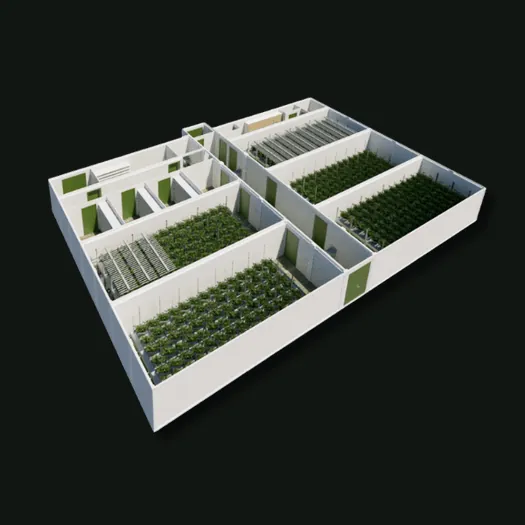
A newer modular cultivation system highlights how important climate control becomes at larger scales, featuring pre-installed HVAC, integrated dehumidification, and automated environmental management. These elements help maintain stable temperature and humidity, which support more consistent growing conditions as operations expand.

The beginner takeaway is simpler: buy a setup that lets you read and react to temperature and humidity changes quickly. In a small cabinet, swings happen fast. That is why a cheap sealed box with poor exhaust is often a worse buy than a simpler setup with reliable airflow.

Automation and app control

App control sounds great, and sometimes it is. A good app can help you check light schedules, fan speed, or environmental readings without opening the box. But here’s the problem: automation is only useful when the hardware is dependable. A weak fan with a slick app is still a weak fan. That is why the smartest buyers treat app control as a convenience layer, not the foundation of the purchase. Box4Grow’s current commercial systems also provide remote monitoring, but they pair it with actual environmental hardware instead of presenting software as the whole value proposition.

Real growing space

Marketing photos can be a little cheeky here. What matters is usable canopy area and working height, not just outside dimensions. Box4Grow’s spec sheets are unusually explicit on dimensions, insulation, power loads, and climate targets across its lineup, which is the kind of transparent technical presentation more beginner-facing brands could learn from. When a box is too tight, you lose flexibility on light distance, airflow path, and plant training.

Best grow box for beginners by use case

The best grow box for beginners changes with the buyer. If you live in a small apartment and want an enclosed setup that looks less obvious than a tent, a compact grow cabinet or automated grow box makes sense. If your main goal is to start growing with minimal assembly and less guesswork, that kind of enclosed unit is easier to recommend than a pile of parts.

If your budget is tighter, a small grow tent kit often wins. It usually costs less to enter the category, and you can choose your own lighting, fan, and carbon filter instead of paying for a rigid cabinet shell. That route asks more from you at setup, but it also gives you more freedom later.

If you want a hydroponic garden specifically, the best move is usually a box or tent that has enough room for your chosen reservoir, airflow path, and maintenance access. USDA’s hydroponics overview makes clear that hydroponic systems can be used by hobbyists and commercial growers alike, but the crop and method determine what sort of physical setup works best. So a hydroponic-first beginner should buy for maintenance access and climate stability, not just for looks.

If you are comparing mainstream names, the practical differences still come back to the same shortlist: environmental stability, odor control, ease of use, and whether you can get replacement parts without a hassle. That may sound less glamorous than brand hype, but it is the kind of detail that keeps a beginner in the hobby instead of burning out.

What a beginner can expect to spend

Purchase price gets all the attention, while electricity, filter replacement, and maintenance get treated like footnotes. Many people ask about how much a grow box costs to run. It is useful here because it breaks the problem into electricity, consumables, and replacement items rather than pretending the price tag ends at checkout.

The math itself is simple. 

Electricity cost = (Watts ÷ 1000) × hours per day × electricity rate × days per month

For example, a 300-watt LED running 18 hours a day using about 162 kWh a month, which would cost €40.50 at €0.25 per kWh for the light alone. Add fans and other draws, and the sample system reaches about €47.70 a month.

Cost layerTypical beginner expenseWhat drives it
Purchase costHigher for the integrated grow box, lower for the tent shellCabinet build, included hardware, automation
Monthly electricityMostly lighting, then fans and climate devicesLED wattage, daily light cycle, local utility rate
ConsumablesCarbon filter, growing medium, nutrients, and small partsFrequency of use and crop cycle length
Occasional replacementFans, timers, filters, and some lighting componentsHardware quality and runtime

Horticultural lighting is a large energy user, and LED conversion can reduce that load meaningfully. That is why beginners should care less about gimmicks and more about whether the box uses a sensible LED grow light and avoids unnecessary heat. Lower heat often means lower fan demand and fewer climate corrections. And that’s why it matters.

Cannabis plants in a grow tent with fan, carbon filter, and LED light, illustrating why strong air circulation prevents humidity and fungal issues in grow boxes.

The real pros and cons of a grow box

What’s good about a grow boxWhat to watch out for
Beginner-friendly and usually faster to set upOften costs more at the start
Compact design fits smaller spaces wellCan feel restrictive as plants grow
Stronger odor control than many open setupsHarder to upgrade piece by piece
Helps create a more controlled environmentPoor airflow in cheap models can cause humidity issues
Works well for growers who want convenience firstNot always the best long-term value

That is why the best grow box for beginners is not automatically the best long-term setup for every grower.

Best plants for a beginner grow box

Before choosing a crop, beginners should start with plants that grow quickly, tolerate minor mistakes, and adapt well to controlled environments such as a grow box, grow cabinet, or indoor grow tent. Fast-growing herbs and leafy greens are usually the easiest starting point because they require less vertical space, shorter cycles, and simpler nutrient management in an indoor gardening setup.

PlantWhy does it work well in a beginner grow boxTypical harvest time
BasilThrives under LED grow light and tolerates indoor humidity changes4–6 weeks
LettuceIdeal for hydroponic garden setups and compact grow boxes3–5 weeks
SpinachHandles cooler indoor temperatures and grows quickly4–6 weeks
MicrogreensExtremely fast cycle and very small growing space required7–14 days
MintA hardy plant that tolerates beginner mistakes in watering or nutrients4–6 weeks
Strawberries (compact varieties)Works well in controlled indoor environments with full-spectrum LED lights6–8 weeks
Cherry tomatoes (dwarf varieties)Good learning crop for light distance and airflow management8–10 weeks

Once you become comfortable managing temperature, humidity, lighting cycles, and airflow, you can gradually experiment with more demanding plants or a full hydroponic garden setup. Starting with these beginner-friendly crops helps you learn the fundamentals of indoor gardening while keeping the environment stable inside your grow box.

Researcher measuring LED grow light distance above cannabis canopy with a PPFD meter display visible, showing why light distance matters for cannabis plants.

Why Box4Grow is the best option for beginners 

For beginners looking for the best grow box for beginners, simplicity and reliability often matter more than flashy features. This is where Box4Grow stands apart. Instead of requiring users to assemble lighting, ventilation, and climate systems separately, Box4Grow provides pre-engineered indoor growing environments designed to maintain stable temperature, humidity, and airflow from the start.

Box4Grow systems arrive pre-wired and pre-plumbed, with integrated LED lighting, ventilation, and irrigation already configured. This approach removes much of the technical guesswork that new indoor growers typically face when building a grow room from scratch. 

Another advantage is scalability. Box4Grow’s modular design allows growers to begin with a compact setup and expand later without rebuilding the entire growing space. For beginners who want a system that works immediately but can grow with their experience, Box4Grow offers a balanced entry point between convenience, control, and long-term flexibility.

Buyer typeBest starting optionWhy
Apartment beginner with limited spaceCompact grow box or grow cabinetCleaner footprint, easier odor control, and less assembly
Budget-conscious first-time buyerSmall grow tent kitLower entry cost and easier future upgrades
Buyer focused on convenienceAutomated grow boxLess setup work if the hardware quality is sound
Hydroponic beginnerBox or tent with strong maintenance accessEasier reservoir checks and climate adjustments
Future commercial growerLearn small, then study modular systemsHelps build skills before moving into larger infrastructure

Conclusion: A sensible way to choose

If your goal is simple, buy simple. The best grow box for beginners is the one that matches your room, budget, and tolerance for maintenance without promising magic. Look for a stable LED grow light, real odor control, enough growing space to avoid crowding, and a layout that makes routine checks easy. If flexibility and lower startup cost matter most, a grow tent may beat a grow box. If discretion and convenience matter most, a good grow box is hard to argue with.

And if you are thinking beyond a first hobby setup, this is where Box4Grow becomes relevant. You can explore Box4Grow for a wider view of how the company approaches controlled-environment cultivation, or use its design-your-growbox tool if you want to explore a more custom route. For buyers who want to start small now and understand the bigger category before they scale, contact us for a useful next step.

Share this Article:

LATEST B4G ARTICLES

OUR WEEKLY NEWSLETTER

B4G BUILDS

Wanna Build Your Commercial Growing Facility?

From NY microbusinesses to multi-state operators, licensed cultivators choose Box4Grow for modular grow rooms that meet OCM standards and deploy in 12 weeks.

More Articles

Discover the Box4Grow Difference

Built by growers, engineered for compliance. We've deployed 400+ turnkey cultivation facilities across the United States. See how we're revolutionizing commercial cannabis infrastructure.

Discover more from Box4Grow

Subscribe now to keep reading and get access to the full archive.

Continue reading